Essential Event Equipment Checklist for Corporate Events
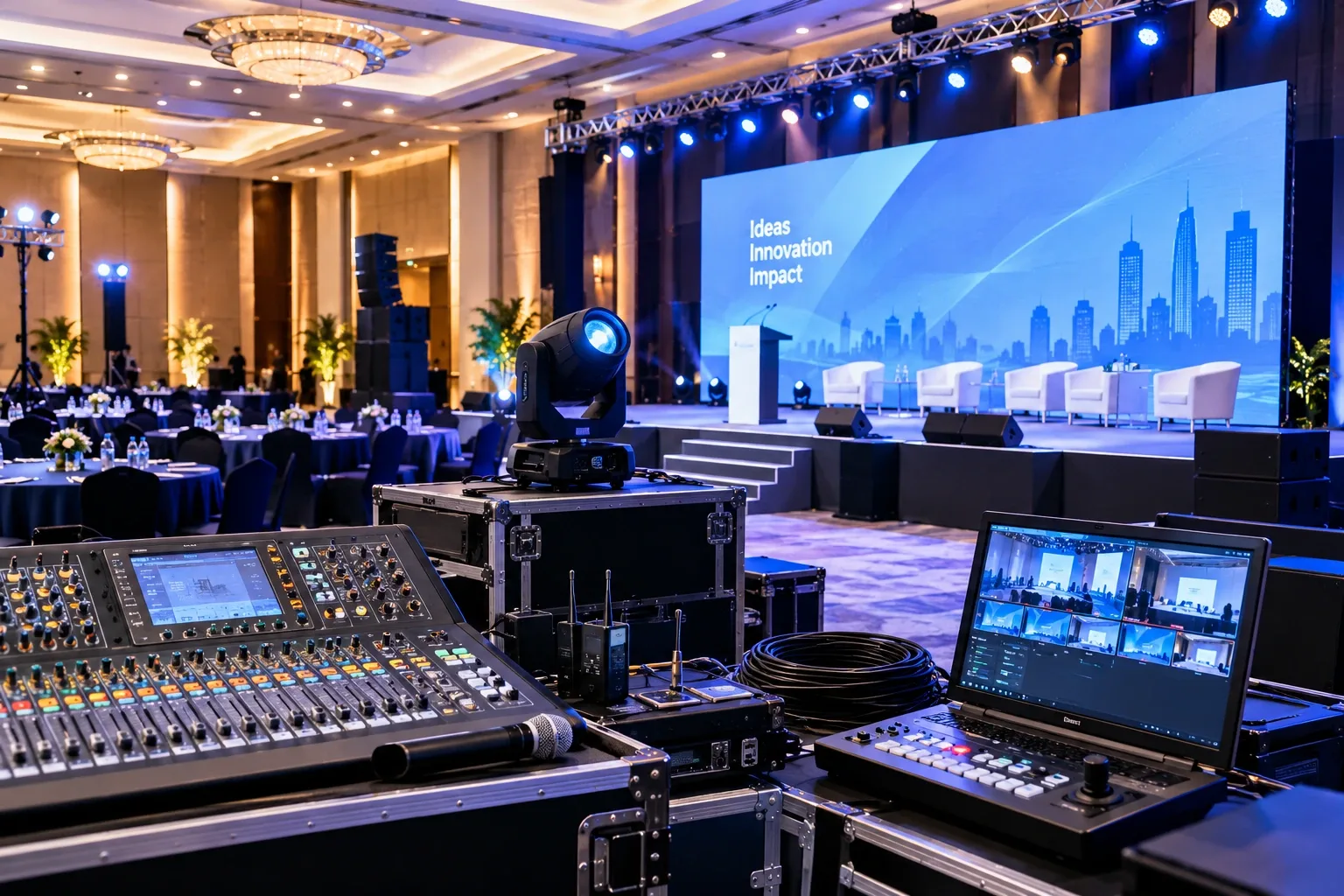
Most guests remember the music, the stage and the mood. Almost nobody notices the cable under the carpet or the generator humming behind the venue, and that is how it should be. An event runs smoothly when the equipment is chosen well and checked twice. Here is a plain look at what gets used to run an event, whether it is a small product launch or a large brand activation in Delhi.
Equipment Used in Running Any Event
Sound Equipment
Guests judge sound before anything else, even if they cannot say why. A basic setup has speakers, a mixer, microphones, cables and monitor speakers for the people on stage. Wireless handheld mics suit hosts who move around, and lapel mics keep a presenter’s hands free. Large halls and open grounds need more evenly spaced speakers so the back rows hear as well as the front rows. Keep two spare mics charged, because a dead mic in the middle of a speech is a problem most organisers know well.
Lighting
Lights decide how the venue looks in photos and videos. Par lights and LED wash lights colour the stage and walls, moving heads add movement for concerts and award nights, and follow spots keep the speaker clearly visible. Most lights hang on truss and run through a controller that an operator handles during the show. At brand events, clean lighting on the logo and backdrop often matters more than fancy effects. Ask for a lighting plan before the day so you know how the room will look.
Stage, truss and structures
A stage is built from modular platforms with steps, ramps and railings. Truss holds lights, speakers and banners overhead, and barricades manage queues and keep crowds away from cables. Outdoor events need tents or hangars against rain and sun, along with proper flooring so the ground stays level and clean. Check the load limit of every structure before anyone stands on it or under it.
LED screens and video
LED video walls are common at larger events because they stay bright under stage lights and in daylight. Look at the pixel pitch: a smaller number gives a sharper picture from closer range. A video processor feeds the wall, and cameras with a switcher handle live feeds and recordings. Keep a laptop with all presentation files ready as a backup.
Power and safety
Nothing works without power, so this part of the plan comes first. The setup includes silent generators, distribution boards, heavy-duty cables and UPS units for sensitive gear like video walls. Add up what everything draws and keep extra capacity in hand. A standby generator is worth the cost at any large event. Cable ramps stop people tripping, and fire extinguishers, first aid kits and proper earthing get checked before the doors open.
Registration and communication gear
Guests meet this equipment first. Laptops or tablets, QR code scanners and badge printers speed up check-in and shorten queues. Behind the scenes, the crew uses walkie-talkies so the stage manager, sound team, and security can talk without ringing each other’s phones. Reliable Wi-Fi or a dedicated internet line matters for registration software and live streaming.
Comfort, decor and branding
Delhi’s weather changes the equipment list. Summer events need coolers or ACs, winter events need heaters, and open-air venues benefit from misting fans. Furniture, floral stands, branded counters, standees, kiosks, and signage turn an empty hall into a branded space. A photo booth or a product demo zone gives guests something to do and something to share.
How to plan the equipment list
Start with the event and work backwards to the equipment. Write down the guest count, venue size, indoor or outdoor setting, event length and programme. Work out what each part needs, then visit the venue to check power points, ceiling height and whether large items fit through the gates. Book a full test run before the event day, and ask your vendor what the backup is for sound, power and screens.
A good event feels easy to the guest because someone planned the hard parts.
If you are organising one in Delhi, Akroil International can plan the equipment side with you and handle it on the day.
