Event Planner in Delhi: Creating Memorable Corporate Event Experiences
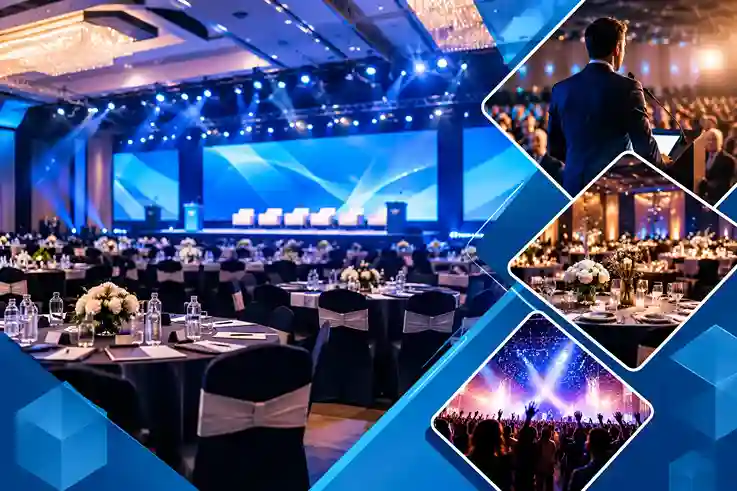
In any five-star banquet hall in Delhi on a Tuesday evening, you'll see three product launches happening all at once, each vying for the same distracted crowd of journalists and clients. Nobody remembers the third one they attended that night. That's the problem every enterprise in the National Capital Region quietly wrestles with, and it has nothing to do with the size of the room they booked.
Delhi isn't just a capital city with government buildings and traffic jams. It's a battlefield where global corporations and scrappy startups fight daily for the same slice of market attention, and a rented hall with a printed backdrop doesn't cut it anymore. Brands that want to be remembered have quietly changed their playbook, and the shift comes down to one word: experience.
Why Corporate Events in Delhi Are Becoming Experience-Driven
People Don't Attend Events Anymore
Something changed in how audiences show up to corporate gatherings. Nobody wants to sit through forty-five minutes of a CFO reading slides aloud. Attendees walk in already half-checked-out on their phones, scrolling, waiting for a reason to look up. Delhi's smartest brands figured this out early. A well-built event experience does three things at once. It earns trust in the first ninety seconds. It gets people posting, tagging, and talking before the coffee break even starts. And it plants the kind of memory that survives long after the lanyards get thrown away.
That's precisely why fewer companies handle events in-house anymore, and more of them hand the reins to a seasoned event planner in Delhi who already knows what today's audience actually responds to.
What Separates a Vendor From a Storyteller
Booking chairs and ordering catering is logistics. Building a brand journey is something else entirely, and the agencies who understand the difference are the ones getting repeat business year after year.
- They build the world before they build the stage: Great production teams never open a floor plan first. They open the brand's story, then design curved LED walls, sensory lighting, and walk-through brand zones around it, so guests feel pulled into the narrative rather than parked in front of it.
- They break the room into smaller conversations: The giant, single-stage conference is fading fast. In its place, micro-sessions and focused learning pods let each attendee group get a pathway built for them, complete with live polling boards where people actually vote and argue rather than nod politely.
- They turn swag into a spectacle: Nobody keeps a plastic pen with a logo on it. But hand someone a jacket getting laser-engraved with their name in real time, right there on the showroom floor, and suddenly they're filming it for their own followers.
The Old Way Versus the New Way
| What Used to Happen | What Happens Now |
|---|---|
| Flat backdrops with tinny PA speakers | Curved LED walls with spatial audio that fills the room |
| Sixty-minute lectures nobody remembers | Fifteen-minute lightning talks and open fireside chats |
| Generic office kits in tote bags | Live customization bars making usable gear on the spot |
| Awkward mingling during coffee breaks | Smart matchmaking built from actual professional data |
The Technology Nobody Notices Is Working
Here's an odd truth about great production: the best tech is invisible. Guests never see the wiring, the sensors, or the software making decisions behind the scenes, and that's exactly the point. Smart badges track crowd flow quietly, and when one breakout room suddenly fills up faster than expected, the system responds on its own. Signage outside updates. Catering crews shift snacks toward the crowd. Air conditioning recalibrates before anyone even notices the room got warm.
Data protection matters just as much as the show itself. Serious event planners in Delhi keep production networks completely separate from public Wi-Fi, encrypt every registration record moving through their systems, and lock backend dashboards behind multi-factor authentication so a single leaked password can't compromise months of planning.
Delhi Logistics Reward Those Who've Done It Before
Running events near government zones means navigating security clearances, VIP convoys, and permits that change depending on which ministry you're near that week. Add Delhi's brutal summer heat and its sudden monsoon downpours, and outdoor productions need structures built to survive both extremes, with reinforced rigging, industrial cooling, and backup power that kicks in without anyone noticing a flicker.
This is the kind of terrain only local expertise can navigate cleanly, and it's why an experienced exhibition company in Delhi becomes less of a vendor and more of a strategic partner.
Stop Counting Heads, Start Counting Behaviour
Registration numbers tell you almost nothing useful anymore. What matters is whether people stayed in a session, answered a live poll, or downloaded a resource three days after the event ended. That's the data that actually predicts whether a relationship turns into revenue.
The Bottom Line
If you're ready to move past predictable agendas and build something your audience actually remembers, Akroil Events brings exactly that discipline to every production it runs across the NCR. From artist management to full-scale corporate activations, Akroil Events handles the operational weight so your team can focus on what genuinely matters: building relationships that outlast the event itself. Reach out to Akroil Events and see what a brand journey built with real strategy looks like.
