How to Choose the Right Seating Style for Your Event
A Practical Guide to Event Seating Arrangements for Conferences, & Corporate Events
Seating is one of those things people only notice when it goes wrong. Guests craning their necks to see the stage, awkward gaps between tables, someone stuck with their back to the speaker for two hours straight- all of it traces back to one decision made weeks before the event even started. Getting the seating style right shapes how comfortable your guests feel, how well they can see and hear what's happening, and honestly, how much they enjoy themselves.
Here's a practical look at the main seating styles and how to figure out which one actually fits your event.
Start With What Your Event is Actually For
Before picking a layout, it helps to be honest about what the event is meant to achieve. A product launch where guests need to focus on a stage calls for a very different setup than a networking dinner where conversation is the whole point. Ask yourself whether people will be watching a presentation, eating a full meal, working in small groups, or some combination of all three. That answer narrows things down faster than browsing a catalogue of seating options.
Theatre Style for Presentations and Keynotes
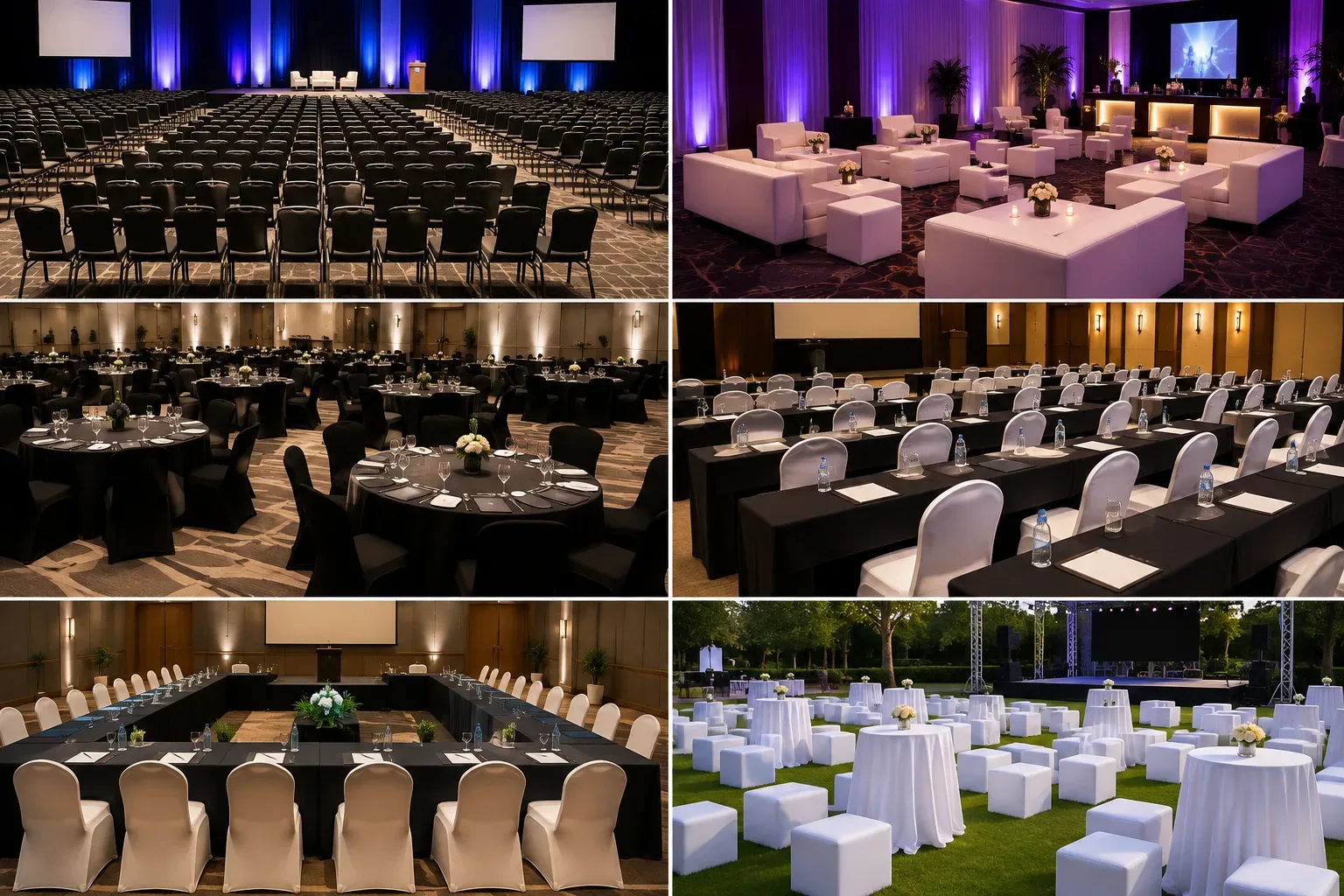
Theatre style is just rows of chairs facing the front, usually split by aisles for easier movement. It's the go-to for conferences, keynote sessions, and any event where a large audience needs to sit and listen for a stretch of time. It fits the most people into a given space, but it doesn't leave much room for note-taking or eating, so it works best for shorter sessions or events without a dining component.
Classroom Style for Workshops and Training
Classroom seating brings in tables along with the chairs, arranged in rows facing the front. This is the natural pick for training sessions, workshops, or anything where attendees need a surface to write on or a laptop open in front of them. It takes up more space than theatre style since you're fitting tables in as well, so it works better for smaller groups than for large keynote audiences.
Banquet Style for Dinners and Celebrations
Banquet style uses large round or rectangular tables, and it's the standard choice for weddings, galas, and dinner events where the meal is the main event rather than a side detail. It's built for conversation, since guests are seated close together and facing each other, but it isn't great for events with a strong presentation component. Some guests will inevitably have their backs to the stage, and there's not much getting around that.
Cabaret Style for a Bit of Both
Cabaret style takes the round tables from banquet seating but leaves one side open, so everyone at the table can still see the front of the room. It's popular for award nights, conferences with a dining segment, and events that mix a presentation with socializing. You lose a bit of seating capacity since tables aren't filled, but you gain much better sightlines and a more relaxed atmosphere than a straight banquet setup.
Hollow Square and Boardroom for Discussions
When the event is built around discussion rather than a stage, a hollow square or boardroom layout works better than any of the above. Tables are arranged to form an open square or rectangle, with everyone facing inward. This suits meetings, brainstorming sessions, and smaller executive gatherings where the point is direct conversation between attendees rather than watching a speaker.
Things Worth Checking Before You Decide
Once you've narrowed down a style, a few practical details are worth confirming with your venue or vendor. Guest count matters more than people expect, since some layouts eat up far more floor space per person than others. Banquet seating, for instance, needs noticeably more room per guest than theatre style does. It's also worth thinking about accessibility, keeping aisles wide enough for easy movement, and leaving enough clearance around tables for servers if the event includes food.
If your event runs across different segments, a keynote followed by breakout discussions, for example, ask your venue whether they can switch layouts partway through rather than assuming one setup has to work for the entire day.
The Bottom Line
Seating style isn't something to finalize at the last minute. It affects your guest count, your venue layout, and how the entire event actually feels once people are in the room. Whatever the occasion, from a corporate conference to a wedding reception, matching the seating to the purpose of the event, rather than picking whatever looks good in a photo, is what makes the difference between a room that works and one that just looks nice on paper.
